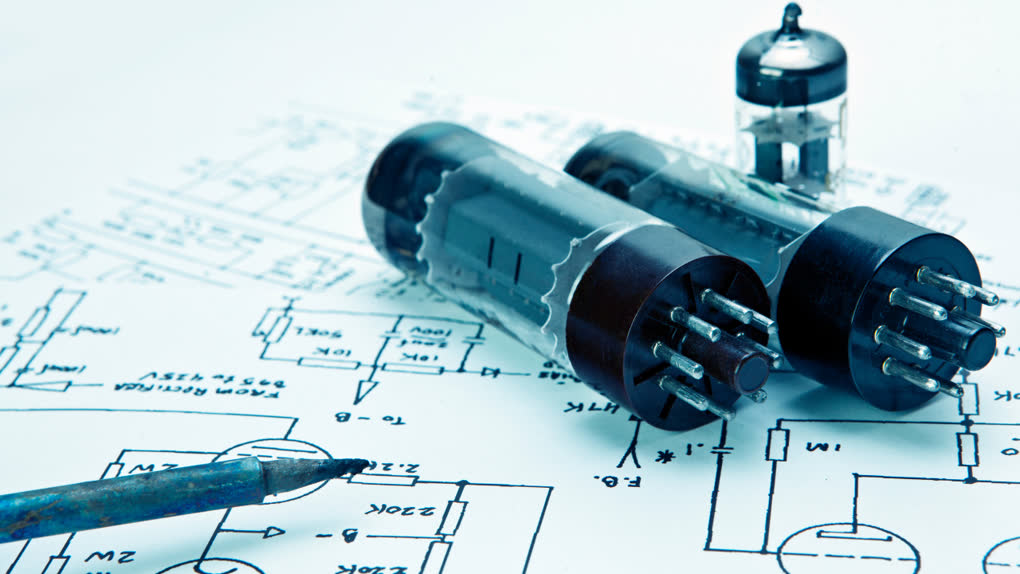
“Nothing feels like tubes” is getting harder to say
For a long time the honest complaint about modelers wasn’t tone. It was feel. You could get a recording that fooled people. You could get a live sound that worked. Then you’d dig in on the edge of breakup, roll the volume back, or try to play soft and loud in the same phrase, and the thing would go flat. That was the gap. Tubes forgave you. A lot of digital did not.
That gap is smaller now.
I’m not saying every box on the market suddenly turned into a Trainwreck in a room. I’m saying the new generation — ToneX V2, Quad Cortex V2, NAM A2, and Kemper 2.0 profiling and whatever else is landing — is putting real work into touch sensitivity and response. Enough that the old line, “nothing feels like tubes,” is getting harder to say with a straight face.
What “feel like an amp” actually means
People use that phrase for three different things and then argue past each other.
First: does it clean up when you roll the guitar volume down? Second: does it get nastier when you dig in, without you twisting a gain knob? Third: does it stay musical when you play soft — still some gain in the air, but delicate?
If a modeler fails those, it feels like the old Pod Bean. If it passes those tests, it starts to feel like an amp, even when you know it’s a capture.
The Express example
I’ve been sitting with Trainwreck Express captures on ToneX. Same idea showed up on Quad Cortex V2. The point isn’t brand loyalty. The point is how the capture behaves under your hands.
Swap guitars and you hear the platform get out of the way. A more modern guitar with a JB and a 59 is one language. A PAF-style setup is another. Middle position cleans up. Bridge digs in. None of that is unicorn farts or unobtanium transistors, it’s a vacuum tube.
On a 59, you can sit on the neck, leave the pickup full, and still get a usable clean by riding volume. You’re not forced into a coil split just to breathe. Pull back and it gets delicate. Lean in and it gets dirty. You can live in the middle for a long time without parking the gain at 10.
That’s the part that used to fall apart on older digital. You’d get one “good” gain stage and everything else felt like a compromise. Here the continuum is wider. You can play soft and still hear that there’s gain waiting. You can get a little grit without the whole thing sounding fake or digital. Turn it up and it still has somewhere to go.
What closed the gap
I’ve gotten this kind of response out of Kemper before. Last-generation platforms could do it when the profile was good and you weren’t asking for miracles. What’s changed with the V2 wave is how often it shows up without fighting the unit.
The argument used to be semi-legit: tubes do something digital doesn’t. I’m not ready to say that argument is dead. I am ready to say it got thinner. There’s something that behaves a lot like tubes under the fingers now. That’s not a small thing, and I don’t hear enough people say it out loud.
Capture quality still matters. Guitar still matters. If you feed a ceramic pickup into an overly bright capture and expect magic, you’ll still be disappointed. But blaming “digital” as a category is getting lazy.
What I’m watching next
Helix Proxy. Whatever Kemper does next. NAM A2 trickling down to more cheap units that play it natively — and of course whatever algorithmic jump ToneX and QC are probably working on.
I may put a real amp next to the ToneX capture and chase touch sensitivity in the booth. That’s the clean comparison. Until then, the practical takeaway from sitting with this stuff is simple.
Takeaway you can argue with: if your modeler still feels dead under the fingers in 2026, the problem is more likely the capture, the guitar, or the platform generation — not some permanent law that only tubes can feel alive.
Great time to be a guitar player.
-HW out